Thailand's Digital Economy and Society Ministry will work with Meta, TikTok and search platforms to improve detection of illegal gambling promotion and share suspicious activity with police.
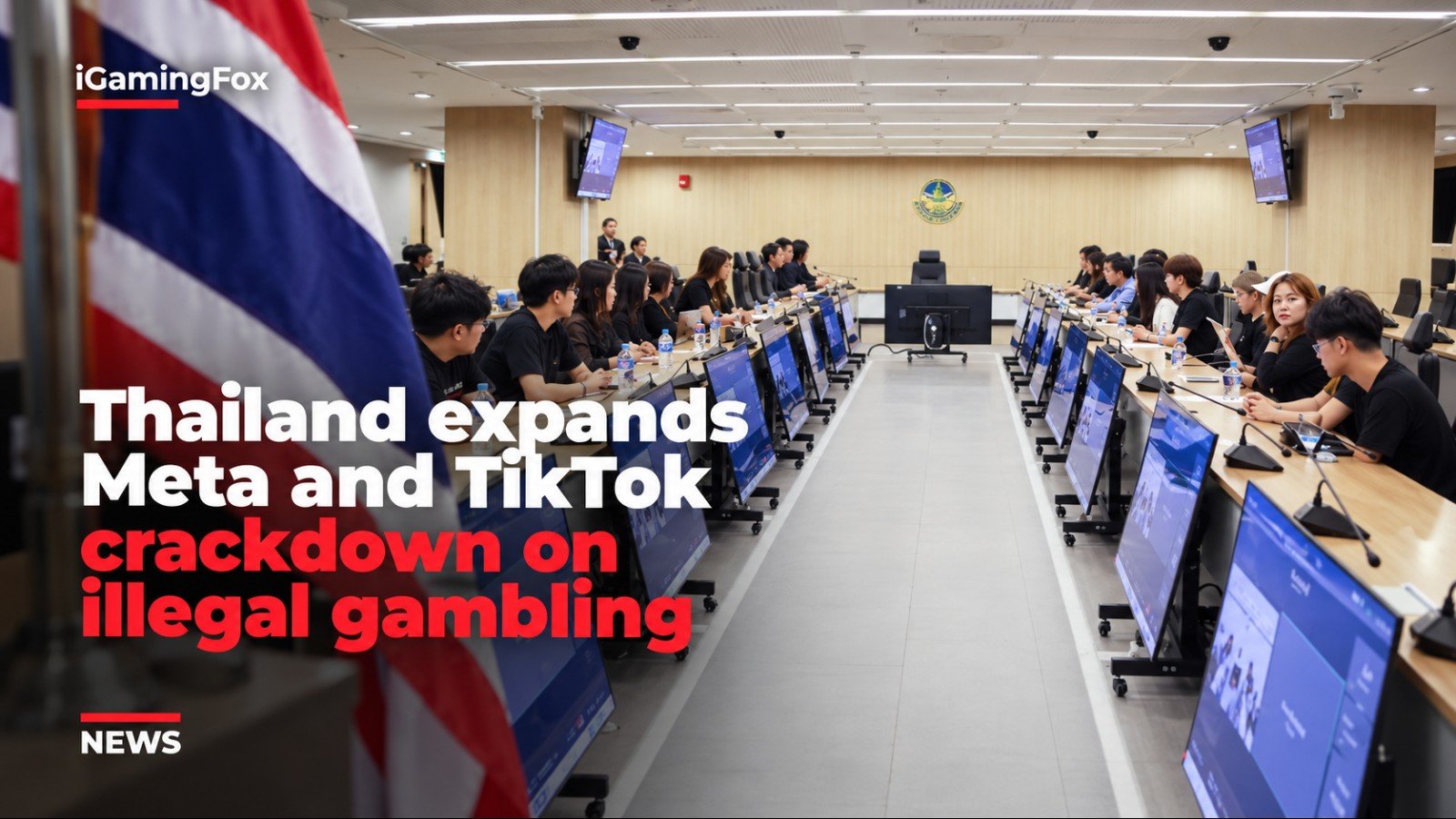
Thailand's Ministry of Digital Economy and Society is expanding cooperation with Meta and TikTok as part of a broader crackdown on illegal online gambling advertising and related content.
The ministry plans to establish a working group that will collect and analyse information from the public before coordinating with digital platforms including Meta and TikTok.
Relevant information on suspected illegal gambling activity will then be passed to the Royal Thai Police for further action.
The initiative follows discussions between the ministry and several anti-gambling and youth organisations on October 5.
Users Will Be Able to Report Gambling Content
One part of the programme will introduce reporting channels through which members of the public can flag online gambling websites, advertisements and other related activity.
The ministry intends to combine those reports with information already received from police and data generated through its own monitoring systems.
Thailand already uses AI technology to identify suspected gambling websites and other illegal online content.
Under the expanded approach, information gathered from users and digital platforms will feed into a broader surveillance and enforcement system rather than relying exclusively on authorities discovering content themselves.
The government says particular attention will be given to gambling material reaching children, young people and students.
Search Engines Will Also Face Greater Cooperation
The enforcement initiative extends beyond social media.
Thailand plans to work with search engine providers on proactive measures designed to reduce the visibility and accessibility of gambling websites and related information through search results.
The government has not yet disclosed which search companies will participate or the precise technical measures they will implement.
The Ministry of Digital Economy and Society also plans to coordinate with education, interior and security agencies on campaigns intended to raise awareness of online gambling risks.
The approach reflects a shift from blocking individual gambling sites toward targeting multiple customer acquisition channels, including social media, search and advertising.
Thailand Targeted 945,075 Gambling URLs in Fiscal 2026
The expanded cooperation follows a major increase in enforcement activity during Thailand's 2026 fiscal year, which ran from October 2025 through September 2026.
The ministry reported action against 945,075 gambling-related URLs during the period.
Court orders accounted for 835,207 URLs. Of those, 749,546 were identified through the ministry's proactive monitoring and 85,661 came from police information.
A further 109,868 URLs were removed or blocked through cooperation with digital platforms.
The figures refer to individual URLs rather than unique gambling operators or websites. A social media post, page, advertisement or separate webpage can therefore each appear as an individual item in the statistics.
That distinction means the total should be treated as a measure of enforcement activity rather than the number of gambling companies serving Thailand.
Illegal Market Remains Large Despite Prohibition
Most forms of gambling remain prohibited in Thailand, with limited legal exceptions including the state lottery and certain horse racing activity.
Despite that framework, industry estimates cited in recent reporting put the country's illegal gambling market at approximately THB1.1 trillion, around $34 billion annually.
That estimate is not an official measurement of gambling revenue and should be treated as an assessment of the wider underground market.
The scale of URL enforcement shows the difficulty of controlling online gambling through domain blocking alone.
Operators can reach users through social media, alternative domains, affiliates and search results, allowing promotional infrastructure to reappear even after individual URLs are removed.
By bringing Meta, TikTok, search platforms, police and public reporting into the same enforcement process, Thai authorities are trying to move further upstream and identify the digital channels that direct users toward illegal gambling services.






Reacties (0)
Nog geen reacties. Wees de eerste!