
44% of US First Responders Show Problem Gambling Signs
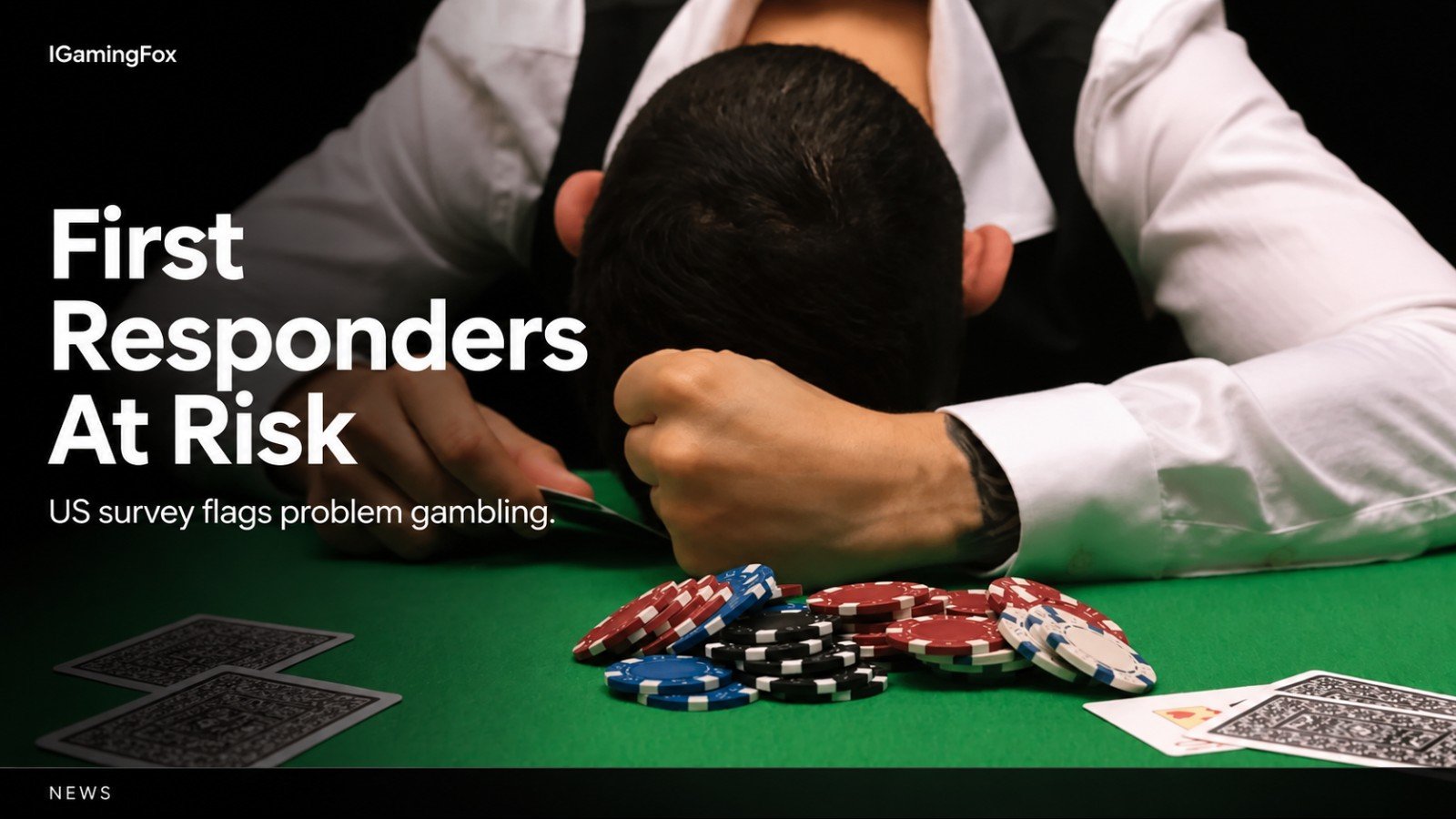
A new study found that 44% of gambling first responders in the US meet the criteria for problem gambling, with rates highest among firefighters and active military personnel.
This website contains information about gambling and betting and is intended for adults only. You must be at least 18 (or the legal age in your country) to enter.
Gambling can be addictive. Please play responsibly.
A new study found that 44% of gambling first responders in the US meet the criteria for problem gambling, with rates highest among firefighters and active military personnel.
Nonprofit research institute Kindbridge Research Institute published a report titled "Gambling among First Responders in the United States," conducted by consulting firm EPIC Global Solutions with funding from a Colorado Division of Gaming grant. The online survey included 507 active firefighters, police officers, EMS personnel, and rescue workers, after researchers excluded 281 of 788 initial responses during a validity check.
The study found that 94.5% of respondents had gambled within the past 12 months, and 31% gambled two or more days per week. Among those who gambled, 44% met the criteria for problem gambling and 39% fell into an at-risk category; across the full sample, these figures were 41% and 36% respectively. Problem gambling rates varied by profession, reaching 49% among firefighters, 42% among police officers, 42% among EMS personnel, and 39% among EMTs. Military experience showed a particularly strong association: 69.6% of active service members showed problem gambling, compared to 52.5% of former service members and 35.6% of those with no military service, with active military personnel showing 11.4 times higher odds of problem gambling than non-veterans. Online sports betting was the most common activity, cited by 345 of 507 participants, followed by online casino games, online lotteries, and online fantasy sports. Half of participants screened positive for possible PTSD symptoms, and more pronounced PTSD symptoms and poorer mental health outcomes correlated with higher gambling-problem risk.
According to KRI's program director, first responders regularly face traumatic events and unpredictable stress, yet gambling has received far less attention in this population than PTSD and professional burnout. The report's authors recommend integrating gambling-problem screening into existing mental health support programs and developing prevention initiatives tailored to specific occupational categories. Findings will be presented September 9 at the EASG 2026 conference in Copenhagen. The authors described the findings as preliminary, noting that participant status was not independently verified, that the study's explicit gambling focus may have attracted a more gambling-engaged audience and inflated estimates, and that the sample's geographic distribution is not nationally representative.
A new study found that 44% of gambling first responders in the US meet the criteria for problem gambling, with rates highest among firefighters and active military personnel.
Games previously exclusive to Stake through its Engine platform will now be available to third-party iGaming operators, co-founder Ed Craven announced.

Michael Ashworth

James Whitfield

Comments (0)
No comments yet. Be the first!