
Dicey Launches Typer Instant Game Built Around Keyboard Inputs
Dicey's new original turns typing into a risk mechanic, with every successful keystroke increasing the multiplier while a losing input immediately ends the round.

This website contains information about gambling and betting and is intended for adults only. You must be at least 18 (or the legal age in your country) to enter.
Gambling can be addictive. Please play responsibly.
Brazil's government legal office has reversed its previous position and asked the Supreme Federal Court to invalidate key provisions that established and regulated fixed-odds betting and online gaming.
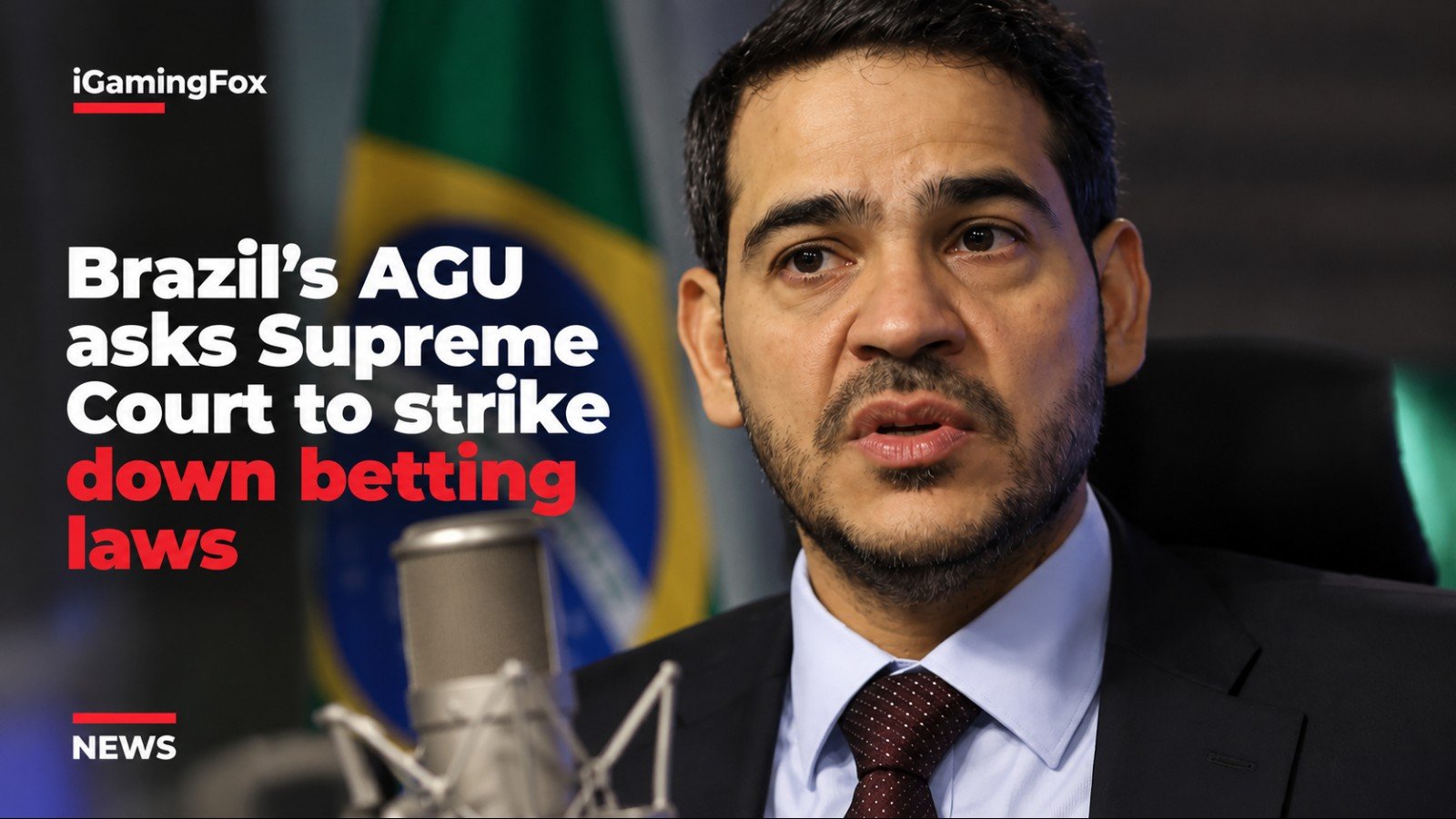
Brazil's Advocacia-Geral da União has asked the Supreme Federal Court to declare key parts of the country's betting legislation unconstitutional, marking a reversal from its earlier defence of the regulatory framework.
The AGU submitted its new position on October 2 in Direct Action of Unconstitutionality 7,749, a case brought by the Prosecutor General's Office and overseen by Justice Luiz Fux.
The challenge targets the core provisions of Law 13,756/2018 and Law 14,790/2023 that enabled and regulated fixed-odds betting, including sports betting and online games. Provisions unrelated to the gambling activity itself are not part of the requested invalidation.
The October filing represents a significant change in the federal government's legal position.
In earlier proceedings concerning the betting framework, the AGU had argued that the legislation could remain constitutional while authorities monitored the effects of the recently introduced regulatory system.
It has now concluded that the protections introduced by regulation have not been sufficient to resolve the constitutional concerns surrounding the market.
According to the AGU, the current framework has failed to provide adequate protection for public health, consumers, household finances, children and adolescents.
The government legal office also argues that measures introduced by the executive branch to reduce gambling-related risks were relevant but insufficient to bring the underlying legislation into line with constitutional requirements.
One of the central arguments concerns the social and health effects associated with gambling.
The AGU cited an approximately 140% increase between 2018 and 2025 in treatment provided through Brazil's public health system to people with gambling and betting-related disorders. Public health data presented separately to lawmakers also recorded a 140% increase over that period.
The figure does not establish that online betting caused the entire increase. The data cover gambling-related problems more broadly, and other factors can influence changes in diagnosis, treatment access and reporting.
The AGU nevertheless argues that the trend, combined with household debt and consumer protection concerns, demonstrates that the regulated model has not provided sufficient safeguards.
The filing also raises concerns around the exposure of children and adolescents and the effect of gambling spending on money required for basic household needs.
The constitutional case is separate from President Luiz Inácio Lula da Silva's temporary prohibition on fixed-odds betting.
The Prosecutor General's Office filed ADI 7,749 in 2024, challenging provisions of the 2018 and 2023 laws and related Finance Ministry regulations.
The PGR argued that the framework did not provide sufficient protection for constitutional rights and also questioned the legal mechanism used to authorise gambling operators.
The AGU's new filing came one week after Lula issued Provisional Measure No. 1,394/2026 on September 25.
That measure separately prohibited the operation, offering, intermediation and advertising of fixed-odds betting nationwide, covering both sports betting and online games.
Licensed betting websites subsequently went offline on October 6.
The distinction between the two proceedings is important for operators.
Challenges against the provisional measure focus on whether the government's temporary ban itself is legally valid.
ADI 7,749 goes further by questioning the constitutionality of the underlying laws that originally created and regulated the betting market.
If the Supreme Court ultimately accepts the PGR and AGU position, the consequences could therefore extend beyond the current temporary prohibition and affect the legal foundation on which federal betting licences were issued.
The court has not yet ruled on the merits of the case.
The gambling industry has separately argued that regulation provides stronger consumer protection than prohibition and has warned that removing licensed supply could push customers toward offshore operators.
For Brazil's previously regulated operators, the AGU's change of position adds another layer of legal uncertainty. The industry is now contesting an immediate shutdown while the federal government's own legal representatives are simultaneously asking the Supreme Court to invalidate central parts of the legislation that created the regulated market.
Dicey's new original turns typing into a risk mechanic, with every successful keystroke increasing the multiplier while a losing input immediately ends the round.
The limited-edition football-shaped soap collection targets fans who backed a rival team because of a bet or Survivor pick, with scents inspired by NFL cities.

Brazil's government legal office has reversed its previous position and asked the Supreme Federal Court to invalidate key provisions that established and regulated fixed-odds betting and online gaming.
The indie game combines modified blackjack with deckbuilding, health-based combat and more than 300 cards, while offering no real-money gambling despite its casino-inspired mechanics.


Breaking iGaming news, bonuses and event alerts — straight to your phone.
Join the channel
Comments (0)
No comments yet. Be the first!