
Brazil Collects BRL9.91 Billion in Betting Taxes in First Eight Months of 2026
Federal tax revenue from betting and gambling rose 69.25% year-on-year, but August receipts fell 20.5% from July as the government discusses a possible online casino ban.
This website contains information about gambling and betting and is intended for adults only. You must be at least 18 (or the legal age in your country) to enter.
Gambling can be addictive. Please play responsibly.
Federal tax revenue from betting and gambling rose 69.25% year-on-year, but August receipts fell 20.5% from July as the government discusses a possible online casino ban.
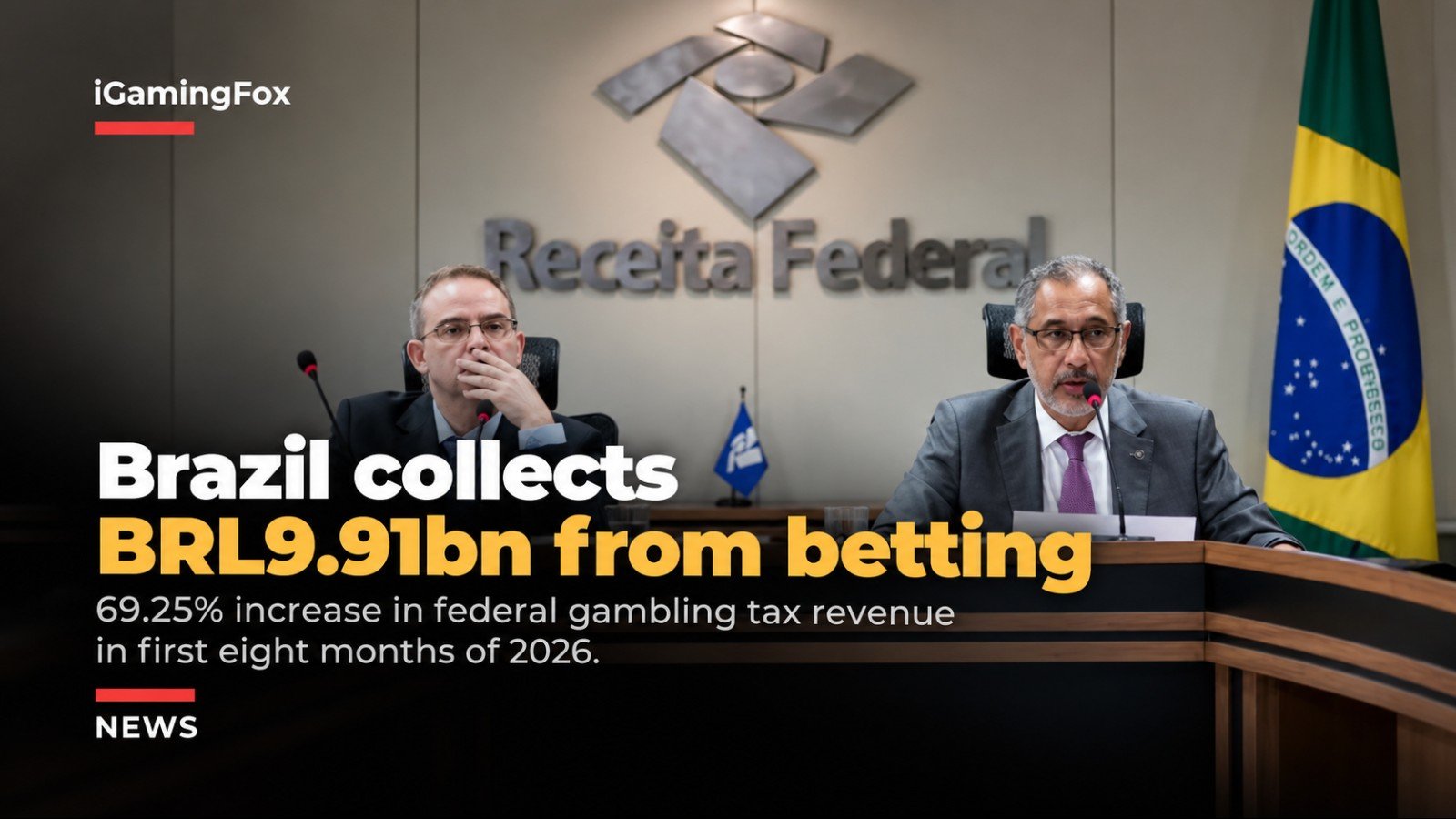
Brazil collected BRL9.91 billion in federal taxes from betting and gambling between January and August 2026, a 69.25% increase on the same period of 2025. The figures come from the Federal Revenue Service (Receita Federal), which published its eight-month tax collection results on September 22, 2026.
The total includes corporate income tax (IRPJ), the social contribution on net profit (CSLL), PIS/Cofins contributions and the direct levy on operators' gross gaming revenue.
The year-on-year comparison is against the first eight months of Brazil's regulated market, which opened on January 1, 2025.
Monthly betting tax revenue fell to BRL1.163 billion in August, down 20.5% from BRL1.463 billion in July.
January was the strongest month of the year so far, at almost BRL1.5 billion. Revenue declined in February and March, which iGaming Business attributed partly to Carnival seasonality. It recovered from April, and July came close to matching January's total.
iGaming Business suggested two possible reasons for the August decline: growing public criticism of betting and the first full month without the boost from the World Cup.
Some earlier projections suggested betting taxes could reach a record BRL16 billion in 2026. After the August drop, iGaming Business estimates the full-year total is more likely to land around BRL14 billion.
For context, Brazil's overall federal tax collection reached BRL2.11 trillion in the first eight months of the year, up almost 12%. Betting's share of that total remains small, but its growth rate is nearly six times faster.
The outlook also depends on political decisions. President Luiz Inácio Lula da Silva has continued to threaten the sector with tougher measures, and banning online casinos has been part of the government's electoral agenda, according to iGaming Business.
Online casino accounts for a large share of the regulated sector's revenue. iGaming Business estimates that a ban could reduce monthly betting tax receipts to around BRL600 million, bringing the 2026 total closer to BRL12 billion.
The industry has warned that a ban would push players and money towards the illegal market. A prohibition could also trigger legal challenges from licensed operators, who paid for authorization to offer online casino games. According to iGaming Business, potential compensation claims could exceed ten times the amount collected from January to August.
No ban has been formally proposed in legislation, and online casino games remain legal for licensed operators in Brazil.
Federal tax revenue from betting and gambling rose 69.25% year-on-year, but August receipts fell 20.5% from July as the government discusses a possible online casino ban.
The Instagram ad shows an AI-generated version of the footballer's father being arrested in Edmonton before promoting Comoros-based Oxibet, which is not authorized by any Canadian provincial regulator.

The CRM provider's own analysis of 1.7 million sessions found GGR landed within 10% of the underlying value of play in only 2.9% of cases.

The exclusive deal covers both men's and women's tours starting in the 2027 season, giving bookmakers and prediction platforms official padel data for the first time.

Comments (0)
No comments yet. Be the first!