Both chambers of parliament have approved an order allowing locally licensed remote gambling businesses to serve players abroad, with the wider licensing framework targeted for implementation by January 2027.
Trinidad and Tobago has moved to open its gambling licensing system to internationally focused remote operators after both chambers of parliament approved the Gambling (Gaming and Betting) (Remote Gambling) Order, 2026.
The House of Representatives unanimously approved the measure on September 30 with 33 votes in favour and none against or abstaining.
The Senate subsequently approved the same order on October 2, completing the required parliamentary approval process.
The measure allows holders of a valid remote gambling licence issued by the Gambling (Gaming and Betting) Control Commission to conduct remote gambling involving customers outside Trinidad and Tobago, subject to applicable regulations and licence conditions.
Previous Law Prohibited Gambling With Overseas Customers
Section 76 of the Gambling (Gaming and Betting) Control Act 2021 originally made it an offence for a person in Trinidad and Tobago, or using remote gambling equipment located there, to invite or enable a person in a "prohibited territory" to gamble remotely.
The legislation defined a prohibited territory as any country outside Trinidad and Tobago.
Violations could result in a TT$5 million fine and seven years in prison on summary conviction. On indictment, the maximum penalty was TT$10 million, approximately US$1.47 million, and up to 10 years in prison.
The 2021 legislation also gave the finance minister authority to amend the restriction through an order approved by parliament, which is the mechanism now being used to permit international remote gambling.
Full Licensing Framework Targeted for January 2027
Operators will require a valid remote gambling licence from the country's Gambling (Gaming and Betting) Control Commission.
However, the parliamentary approval does not mean a fully operational international licensing market is already in place.
During the Senate debate on October 2, Attorney General John Jeremie said the remaining provisions required to bring online gambling fully into effect, including operator licensing, are expected to take effect on or before January 1, 2027.
Digital payments connected with the sector are also expected to remain subject to oversight by the Central Bank of Trinidad and Tobago.
The government therefore has additional regulatory work to complete before operators can begin using the country as a functioning remote gambling licensing base.
Government Sees Remote Gambling as New Revenue Source
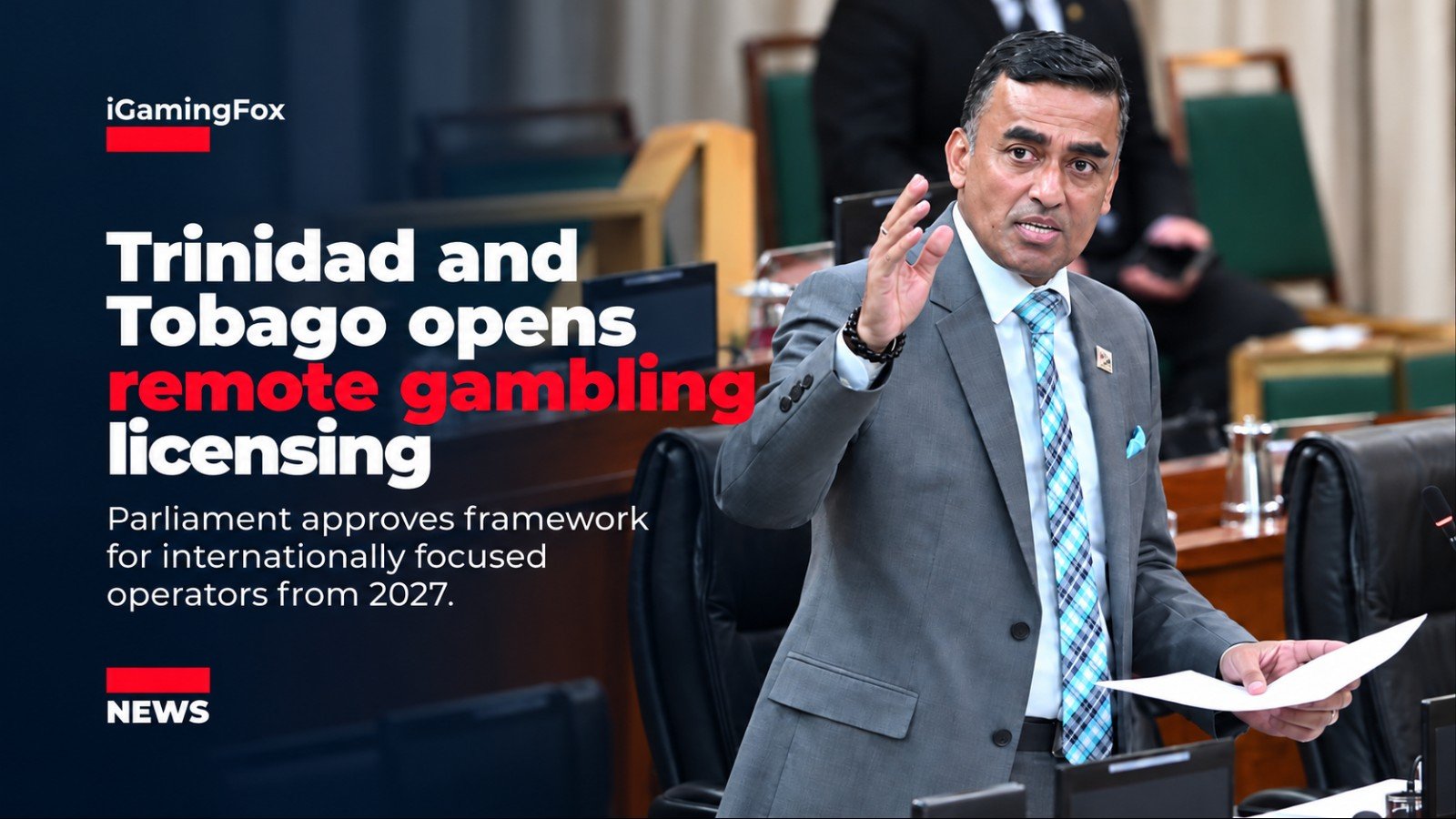
Finance Minister Davendranath Tancoo has presented the reform as both a regulatory and revenue measure.
He argued that licensing remote gambling could bring existing and new businesses into the formal economy, generate employment and attract foreign currency while giving authorities greater visibility over the sector.
Tancoo said Trinidad and Tobago collected approximately TT$72.66 million, around US$10.7 million, from regulated gaming taxes in 2025.
That included TT$15.06 million from Gaming Amusement Tax and TT$57.60 million from Club Gaming Tax.
Collections had reached approximately TT$71.32 million in 2026 by the time the measure was debated.
The government believes an internationally accessible remote gambling industry could add another source of licensing and tax revenue beyond the country's existing domestic gaming market.
Trinidad and Tobago Could Become International Licensing Base
The change potentially creates another Caribbean jurisdiction from which gambling companies could structure internationally focused online operations.
That has led some industry coverage to describe Trinidad and Tobago as a potential new offshore iGaming jurisdiction.
The description is not an official regulatory classification, however, and the commercial attractiveness of the regime will depend on details that have yet to be established, including licence fees, taxation, technical requirements, compliance standards and the application process.
A Trinidad and Tobago licence would also not automatically authorise an operator to accept players in every foreign market. Operators would still need to consider gambling laws and licensing requirements in each jurisdiction they target.
The significance of the reform will therefore depend on the final regulatory framework scheduled to come into effect by the beginning of 2027 and on how the Gambling Control Commission approaches international applicants.




Comments (0)
No comments yet. Be the first!