Parti Québécois has returned to power after backing private iGaming licensing during the campaign, while the Liberals, now the official opposition, have proposed their own competitive market framework.
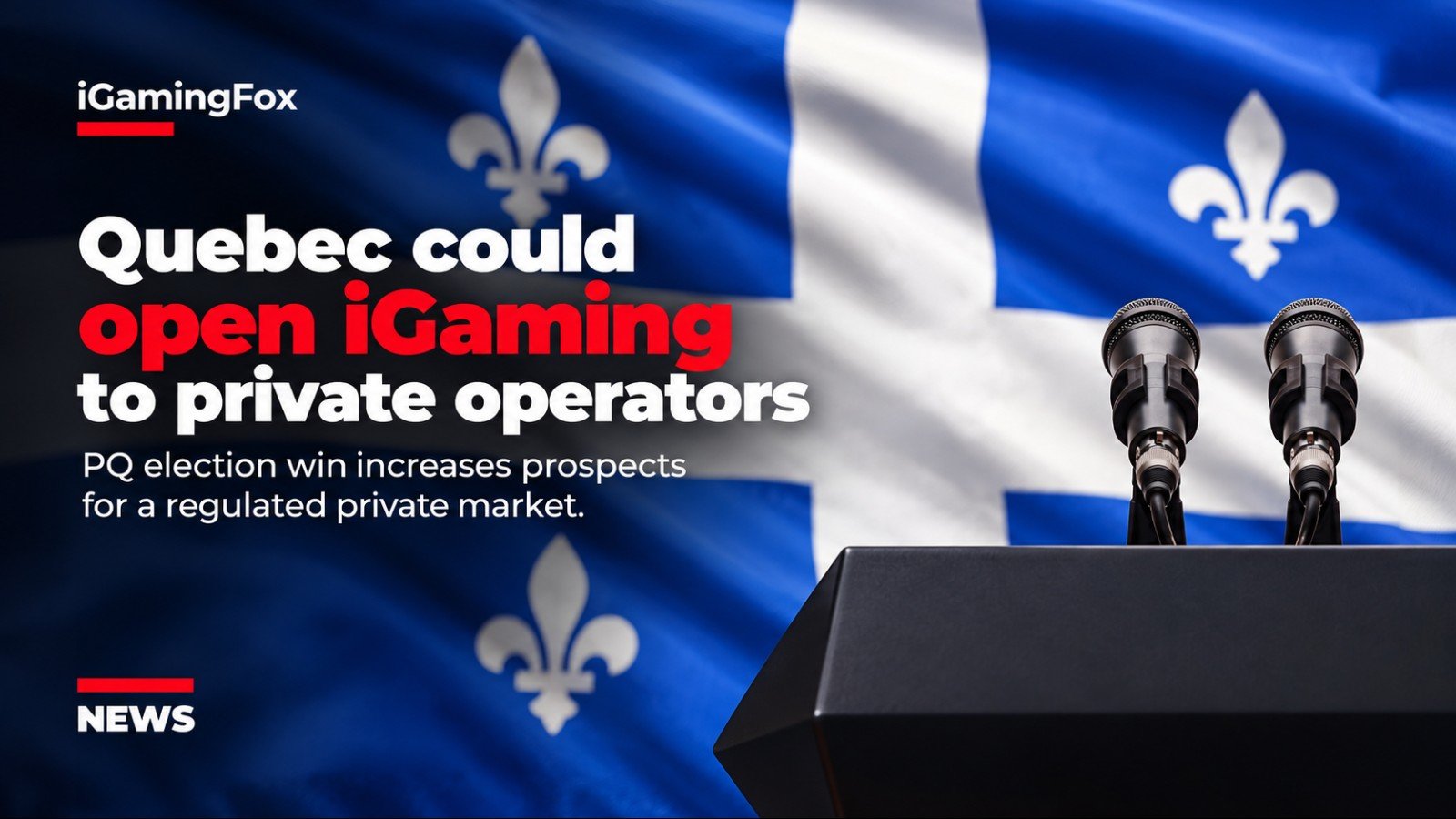
Quebec could become Canada's third province to open its online gambling market to private licensed operators after the Parti Québécois won the October 5 provincial election.
The PQ secured 59 of the 127 seats in Quebec's National Assembly, five short of the 64 required for a majority government. The Quebec Liberal Party won 40 seats and will form the official opposition.
Both parties expressed support during the campaign for regulating private online gambling platforms, creating unusually broad political backing for a potential change to Quebec's current monopoly model.
At present, Loto-Québec remains the only operator legally authorised to provide online casino games and sports betting in the province. Its online offering also includes poker, bingo and lottery products.
PQ Leader Backed Private iGaming Licensing
The issue entered the election campaign on September 9, when Liberal leader Charles Milliard proposed opening Quebec's online gambling market to licensed private operators.
His plan would expand the mandate of the Régie des alcools, des courses et des jeux, or RACJ, allowing it to license and supervise online gambling platforms serving the province.
The proposal also included tighter rules covering advertising, underage gambling and harm prevention, alongside an independent industry-funded organisation focused on gambling-related harm.
PQ leader Paul St-Pierre Plamondon subsequently backed the approach, describing the Liberal proposal as "brilliant" and arguing that Quebec could regulate and tax private online gambling in a similar way to Ontario.
That position is particularly significant following the PQ's election victory, although the party has not yet published a detailed licensing framework or implementation timetable of its own.
Liberal Opposition Also Supports Competitive Market
The election result could make iGaming one of the areas where the minority PQ government and Liberal opposition already have significant policy overlap.
The Liberals now hold 40 seats and entered the election with a more developed proposal for private operator licensing.
Because the PQ does not have a parliamentary majority, legislation would require support from at least some opposition members.
That does not guarantee reform, but the Liberals' existing support for the same broad policy direction could reduce one political obstacle if the government decides to proceed.
The Quebec Online Gaming Coalition welcomed both parties' positions in September and said their commitments represented a move toward recognising and regulating private online gambling platforms.
The coalition includes companies connected with brands and suppliers such as BET99, Betway, DraftKings, Entain, Flutter, Rush Street and Apricot Investments.
Industry Push Predates the Election
Commercial operators have been lobbying Quebec for a licensing system for several years.
The Quebec Online Gaming Coalition argues that the current monopoly does not prevent residents from using private offshore platforms and wants the province to adopt a model closer to Ontario.
The coalition has estimated that a competitive market could generate more than C$300 million annually for Quebec, although that figure is an industry estimate rather than a government revenue forecast.
Support has not been identical across all major political parties.
The coalition highlighted explicit 2026 commitments from the PQ and Liberals. It also noted that the former governing Coalition Avenir Québec supported applying stricter rules to private online gambling companies at its 2025 convention, but the CAQ did not make the same clear election commitment to introduce a private licensing regime.
Quebec Would Follow Ontario and Alberta
Ontario became Canada's first province with a competitive regulated iGaming market when private operators launched on April 4, 2022.
Alberta followed on July 13, 2026, becoming the second province to allow approved private online casino and sports betting operators to compete in a regulated market.
If Quebec adopts a comparable framework, it would become the third Canadian province with an open commercial iGaming model.
The potential scale would be significant.
Statistics Canada estimated the July 2026 populations of Ontario at 16.26 million, Quebec at 9.07 million and Alberta at 5.10 million. Together, the three provinces account for approximately 30.4 million people, or about 73% of Canada's 41.8 million population.
No Quebec Launch Timetable Yet
Political support does not mean a Quebec market launch is imminent.
No legislation has been introduced, no regulator has formally been given a new iGaming mandate and the incoming government has not announced a timetable for drafting or implementing a competitive framework.
Alberta's experience also shows that the process can take years from initial political discussions through legislation, regulatory design, operator registration and commercial launch.
Quebec is therefore closer politically to considering private iGaming licensing than it was before the election, but the market remains a Loto-Québec monopoly for now.
The next significant step will be whether the new PQ government converts its campaign support into a formal legislative proposal.



Comments (0)
No comments yet. Be the first!